




 GIFT:
GIFT:
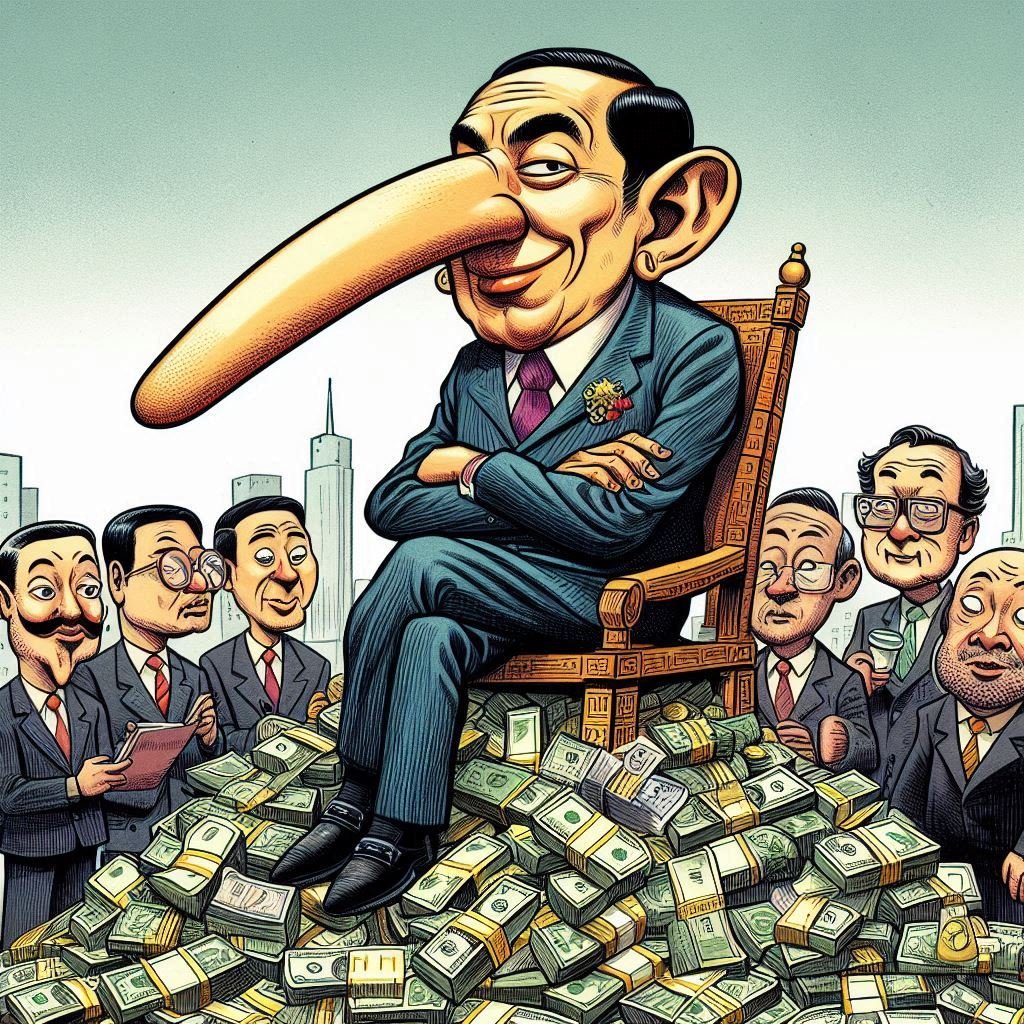
Corruption and corrupt practices cause significant harm to citizens.
CORRUPTION
Corruption erodes institutions, the economy and society. According to studies by the International Monetary Fund and the World Bank, this scourge reduces economic growth, per capita income, human development, quality of life and people’s opportunities for progress, and it also generates inequality. As if that were not enough, it is positively correlated with mental illness and negatively correlated with well-being.
Despite all this, in quite a few countries it has become normalized, especially in dictatorships, non-constitutional monarchies and low-quality democracies where there is impunity for rulers who steal, such as many African states, the Russian Federation, Venezuela, etc. In some institutions it is so widespread that even those who do not engage in it are frowned upon. And many citizens accept it, because if they could, they would do the same.
LIVE WITHOUT HARMING! Do not normalize certain abuses
In many cases, the authorities commit outright plunder, as in Lebanon, Angola—where the daughter of its former president, Isabel dos Santos, has become one of the richest women in the world—or Eswatini, where its king has carried out massive expropriation of land and wealth, with his personal fortune representing 60% of the economy. So much so that he regards the country as his private estate and its inhabitants as his servants.
Let’s follow the example of places such as Denmark, Sweden, Finland or Norway, considered among the least corrupt in the world. In these countries, corruption is dealt with through a combination of severe legal sanctions and social exclusion. Although their corruption levels are extremely low, cases that are detected are subject to rigorous scrutiny and the social response is forceful, since corrupt individuals are, in many cases, ostracized by society. This rejection is part of the “zero tolerance” culture that characterizes these countries, where integrity and transparency are fundamental values. This helps these states rank among the richest, most functional, and happiest in the world.
Read “Happiness-oriented politics”
CORRUPT PRACTICES
Some typical examples are as follows:
- Crony capitalism, like awarding public contracts not to those who offer the best price-quality-timeframe ratio, but to “buddies.” These practices generate economic inefficiency and inequality, institutional weakening, risk of crisis, a decline in innovation and continuous improvement, and a reduction in trust—and, as a consequence of all this, also in the population’s well-being. Let’s learn from countries such as Finland, Norway, Denmark, Sweden or New Zealand, where there is no “crony capitalism” and meritocracy prevails.
- Appointing (“plugging in”) party members to public companies into well-paid roles for which they are not qualified, sometimes even earning a great deal of money while doing nothing or practically nothing.
- The revolving door, that is, the movement of people between public office and positions in the private sector, especially in regulated industries such as finance, energy or pharmaceuticals. This creates conflicts of interest, since former ministers and other political officials can use their knowledge and contacts to benefit the companies they join, or vice versa. This lack of impartiality favors specific interest groups at the expense of public well-being and fair competition.
- An excess of politicians and their privileges, such as unnecessary official cars (when travel can be done by taxi or public transport, as most politicians in Sweden do) or lifelong pensions even for regional offices.
Why should a former regional president have, for life and at the expense of the citizen’s limited means, an office with several well-paid employees and, to top it off, an official car with a chauffeur? Let’s follow the example of the former Prime Minister of the Netherlands, Mark Rutte, who even when he held that office cycled from his home to his office.
- Buying the media with public money so that they say what politicians want and conceal the information they do not want to be made public.
WHAT CAN YOU DO TO PREVENT THESE SCOURGES?
- Take a stand against them, adopting a zero-tolerance attitude rather than a lax one.
- Bear it in mind when voting.
- Encourage others to do the same. For there to be a cultural change in a society, there must be enough people pushing for it.
- Educate children and teenagers in the ethics of integrity. There must be INTENSE awareness-raising so that it can counteract the natural human tendency to appropriate what belongs to others… read more at…
AVOID HARM! Educate children in the ethics of kindness
- Sign to ask all governments to eradicate corruption, corrupt practices, and public waste… SIGN NOW!…
Thank you for sharing and contributing to a better world to live in,

