




 GIFT:
GIFT:
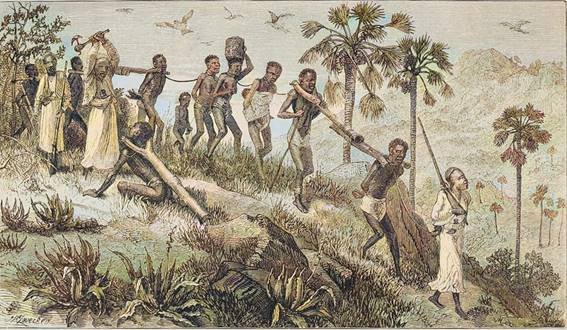
Objectification is something very typical of humans, and it has been practised for thousands of years with other races, ethnicities, tribes, slaves, serfs, women, or even one’s own children. But above all, with other species.
For example, many Russian tsars used serfs—who made up the bulk of the population—as cannon fodder for their conquests, which enabled Russia to become one of the largest empires. And, in fact, the Kremlin continues to use Siberians and other ethnic minorities as pawns on the chessboard of its war in Ukraine, dying or being injured by the hundreds of thousands (disposable).
Objectification stems from our hyper-predatory and selfish nature, whereby our drive to satisfy our needs and desires leads us to use others as mere instruments to that end.
For example, the ancient Roman patricians, the European owners of plantations in the Americas, or large landowners across different continents sought the best possible lifestyle for themselves and their loved ones, with the maximum leisure time in the finest mansions and villas and with every luxury imaginable. To achieve this, they needed slaves to exploit. And to obtain maximum productivity, it was necessary to mistreat them. Doing that requires a lack of empathy for the suffering inflicted on those abused, and for that, one must first label and objectify.
Read LIVE WITHOUT HARM: Let us avoid labels that are a blank cheque to cause harm
Because the left prefrontal cortex of the brain, where our innate sense of justice resides, knows that this is wrong, our opportunism leads us to quickly seek narratives that justify objectification—which are often very foolish… read them in…
…HOW TO LIVE WITHOUT HARM? Let us reject narratives that justify cruelty
These narratives often appeal, among other things, to the supposed superiority of the perpetrator over their objectified victims, even though there is no basis whatsoever for it, giving rise to a perverse narcissism. This is what the ancient Romans did with the peoples they subjugated, whom they called barbarians. For example, of the Germanic peoples they said they were animals that only resembled humans in that they walked on two legs and could speak and sing.
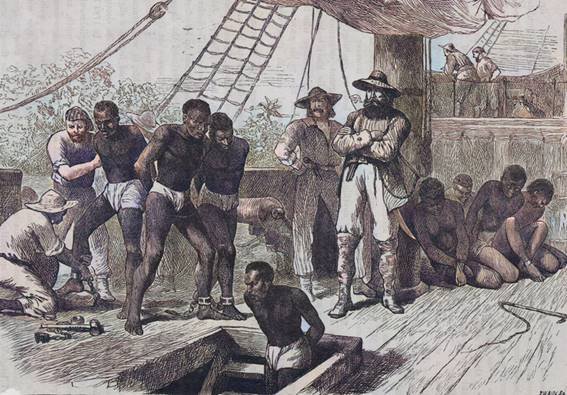
These doctrines, concocted to fit our interests exactly, are something typical of Homo sapiens throughout history. And they are what made it possible, for example, to transport between 12 and more than 20 million African slaves to the Americas in brutal conditions on slave ships.
Once they arrived, different members of families were separated and sold to different plantations, where they had to work up to 20 hours a day. In daily life, the whip was used to achieve productivity and discipline targets. Disobedience was punished cruelly, sometimes with very painful torture. The slave was a mere object, basically subject to the total arbitrariness of their master. It was even common to rape them. Life expectancy was often low on plantations and in mines, since economically it was more worthwhile to squeeze them dry and replace them with others.
For example, the Roman writer Seneca described the role of slaves at a dinner in the home of his friend Lucilius:
“Unhappy slaves cannot even move their lips to say a single word. Any murmur is checked with a rod; not even involuntary sounds—a cough, a sneeze, choking—are exempt from the whip. If a word breaks the silence, the punishment is severe. Hungry and mute, they stand all night (…) We abuse them as we do pack animals (Nardo, 51).”
All of that mistreatment was normalised in those societies because of objectification. Rebellions were crushed without mercy, such as Spartacus’s, in which the 6,000 surviving slaves were crucified along the Appian Way, dying cruelly as they were pecked by carrion birds.
In the Zanj rebellion in the Abbasid Caliphate—specifically in what is now Iraq—by slaves primarily of Black origin, but also Iranian and Maghrebi, estimates suggest that between 500,000 and 2.5 million people died.
Some will think all of that is water under the bridge. NO! Besides the fact that in some places slaves, women, children, and other types of humans continue to be objectified, there is a vast reduction to merchandise when it comes to non-human sentient beings.
We continue to seek the best life for ourselves and our loved ones at the cost of turning others into mere objects. For example, if we can, we make the best plans, the best getaways and holidays to the best destinations and hotels within our reach, with swimming pools and—of course—a buffet with good meat and fish, but at a good price, even if it is at the cost of exploiting and mistreating non-human animals in miserable conditions for life.
At dinner we will be as pleasant with our family members or friends as the ancient Roman patricians were. We will have as much fun as they did, we will even joke casually and laugh as they did, but with one difference: we will take a photo or two with those typical beatific smiles that make it look as though we are very nice and incapable of hurting a fly.
But all of it is merely a facade, a pretty cardboard set like the one the Nazis used when the Red Cross went to inspect the extermination camps.
Because behind our charming smiles and our kindness lies the harsh reality caused by our objectification: the genocide we commit against non-human animals, reaching astronomical figures on a scale that has nothing to do with the greatest human holocausts, such as those caused by Communism in countries like China (40–80 million), the Soviet Union (tens of millions), or Cambodia (1.5–2 million); by nationalisms such as German Nazism (16–17 million), Japanese nationalism (10–30 million), or Turkish nationalism (1.2–1.6 million); or by religions such as Islam (tens or hundreds of millions) or Christianity (millions): more than 2 TRILLION—with a T—animals are killed every year! 20 TRILLION in a decade! Consider that the entire human population currently amounts to 8 billion.
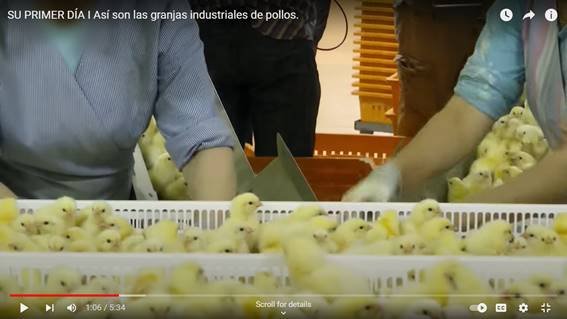
This is not only a large-scale crime, but one carried out with a considerable level of cruelty. The vast majority of these killed creatures have lived in appalling conditions in industrial farms, fish farms, laboratories, etc. And many have been abused. They are usually kept in the minimum amount of space, as that is more profitable, just as happened with the maritime slave trade.
To commit so much evil against innocents, it is first necessary to objectify them, which makes it possible to switch off empathy, so we mentally resort to supremacist speciesism and anthropocentrism.
But no sentient being is a mere object!
FOR A WORLD WITHOUT HARM: Let us not be supremacist speciesists
THE ART OF LIVING WITHOUT HARM: Let us say no to exploitative anthropocentrism
To re-empathise and de-objectify, let us put ourselves in their shoes. In fact, for some time now, news has been appearing in the press about possible extraterrestrials arriving on Earth. Well then, imagine that they believe they are superior to us, that they consider us simple objects for their use and enjoyment and that, therefore, they can do almost anything they want with us. Picture them labelling us as mere elements to be trampled, as the Nazis did with the Jews.
So they abduct you and your loved ones and do to you all the things we do to other species. How would you feel?
Since you are a sentient being, all of that harms you, but they do not empathise with your suffering, because they consider that, since you do not have the right label, you do not deserve compassion or rights.
Do not do to others what you would not want done to you!
Thank you for sharing if you aspire to a world in which people and other beings who feel are not reduced to mere things,

