




 GIFT:
GIFT:
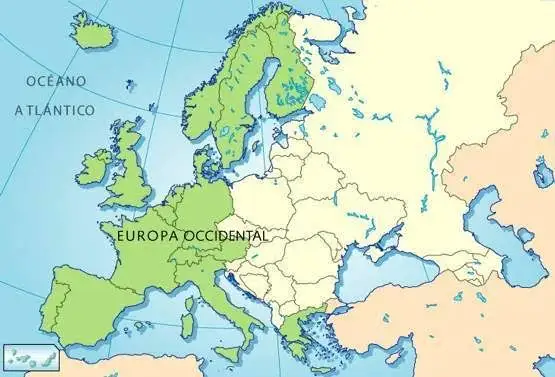
Did you know that happiness has declined in Western Europe? Yes. You heard that right. Although its level of subjective well-being remains among the highest in the world, in most of these countries it has fallen over the last ten years. And this decline affects young people most of all. This is stated in the UN World Happiness Report and the European Social Survey.
In fact, your well-being may also have declined without you even noticing.
But why?
At the Well-Being Institute, we have spent thousands of hours to researching what improves or worsens the happiness of people and societies. That is why I will now explain why this is happening, and how this negative trend can be reversed.
One of the reasons for this decline in well-being in Western Europe, although not necessarily the most important, is that purchasing power is quite stalled. Previous generations lived through genuine economic miracles with great optimism, bringing significant improvements in quality of life.
However, many people today see the future pessimistically, fearing that, for the first time since the Industrial Revolution, they will live in worse conditions than their parents. The idea is spreading that their effort will not be rewarded with the kind of life they deserve.
Listen carefully. To give you an idea, in the Eurozone over the last twenty years we have gone from a GDP per capita that represented 80% of that of the United States to one that represents only about 65%.
But how is this possible if we used to be one of the most dynamic places in the world?
Because we are no longer as focused on generating wealth.
On the one hand, there is poorly managed public spending. It may not be the main cause, but it contributes to it. Would you like an example that outrages many? The waste in public aids for people who can work but do not want to, and instead prefer to live at others’ expense.
And everyone else, the ones who do the heavy lifting while others lie back comfortably, have to work, unpaid and involuntarily, for part of their time to support them. This regime of fiscal slavery is not a major budget item, but it creates a sense of injustice and resentment.
To that money are added other areas of waste, such as subsidizing media to partially control them, an excess of unproductive public employees, in high positions, unnecessary public agencies and companies. There are also subsidies for associations and foundations aligned with governments.
Now pause for a moment and reflect on what I am about to tell you. It would be far more effective to use that money to promote innovation, by replicating successful programmes like those in Israel, Sweden, or the United States. And also to allocate sufficient resources to ensure there is the talent, and above all the funding, that technology startups need.
And if, in addition, incentives were introduced for private capital to invest more in venture capital firms and in stocks, that would boost the creation and development of innovative companies. Most importantly, some would grow and ultimately become major unicorns that would generate a great deal of wealth and high salaries, like Google, Apple, or Amazon.
However, did you know that the areas with the highest public spending are pensions and healthcare? This is due to population ageing: life expectancy is increasing, but the retirement age is not rising at the same rate. And who pays for that? Younger generations, increasingly pressed, through lower purchasing power, higher taxes and higher social security contributions.
But pay attention to this. This could be mitigated by making a major technological effort to automate and robotize the economy, so that fewer and fewer people could produce more. However, it is not being done, because the priorities are more about giving short-term benefits to certain voters than about developing purchasing power, well-being and the general interest in the medium and long term.
This causes excessive indebetedness in some countries, which generates another additional waste: debt interest. Debt can help economic growth in times of crisis or when it is used for sufficiently profitable investments. But when it is used for consumption, it slows the growth of per capita income.
Add to this mix overregulation that is not geared towards wealth creation. This negatively affects, among other things, business initiative, access to competitively priced energy, and the construction of enough housing. The latter considerably limits well-being, especially for young people and those on low incomes.
The interventionist zeal is such that there is more concern about regulating innovation than promoting it. Therefore, is it any surprise that we have lost the technology race to the United States and China?
Keep in mind that research and development not only improve purchasing power, but that some innovations, especially in the field of neuroscience, eliminate or reduce certain types of suffering. Investment in research in this field is essential to maximize happiness.
Moreover, because there are different regulations in each European country and an obsession with local languages instead of promoting English, this creates fragmentation of the European market rather than a single market. And that slows company growth.
Is that it? Not at all! Because it turns out there is also less entrepreneurial and innovative spirit than in the United States or China.
However, to that already explosive mix, add inadequate management of immigration. It is true that immigration has attracted talent that has come to contribute and enrich. Indeed, it is necessary for countries to continue functioning well. And, in fact, it can even increase society’s well-being.
Nevertheless, the lack of sufficiently rigorous filters, like those in countries such as Australia, New Zealand, or Singapore, has also been a magnet for people who have come to take rather than contribute. This is the case of criminals who have increased theft and violent crime in some areas. And there are also those who have increased sexual assaults, sometimes committed in groups, because the perpetrators believe that a woman who does not dress modestly has lost her honour and dignity, and therefore does not deserve respect, but rather to be raped and assaulted. All of this is deeply harmful, creates insecurity, and directly clashes with the golden rule for building a happy society: live without harming anyone, any sentient being. The only exception? Legitimate self-defense, but always against the aggressor and never against an innocent person.
But there is another type of dangerous immigrant who also breaks this principle. They come from very different cultures and want to impose religious rules that are contrary to our rights and freedoms. They support killing, imprisoning, or harming in other ways homosexuals, those who leave Islam and those who criticize their religion. They believe women who do not obey their husbands should be beaten, or that free women (or, in general, those who do not follow their dogmas) should be murdered, assaulted or punished in other ways.
And a third group of immigrants who break the golden rule are the so-called “welfare state tourists”—that is, those who have not come to work, but to live off public assistance. Why do they break the principle of living without harm? Because in reality they are stealing from others the money they work so hard to earn.
As if that were not enough, the complicit do-goodery towards these people means they are usually not expelled.
Moreover, mass immigration in a short period of time in certain areas of Europe has caused healthcare, education and other services to become overwhelmed.
The consequence of all of the above? The degradation of certain places, decline of the well-being state, negative demographic and cultural change and reduced social trust. And all of this causes a fall in well-being.
It is no surprise that more and more Western Europeans, especially qualified young people, are emigrating to countries such as the United States, Switzerland, or Australia.
But there is more: we are spending more and more time on social networks at the expense of face-to-face relationships, which creates loneliness.
And there is also the growing comparison on social media with supposedly “perfect” lives that are not really such, but that make us feel unhappy.
However, there may be even more causes behind the decline in well-being in Western Europe. Tell us in your comments what you think they are, and we will analyse them.
Now, does all of the above mean that we are doomed to keep losing well-being? No, provided that, instead of standing by with our arms crossed as this decline grows, we get to work to reverse all of the above.
How so? By raising awareness among other citizens, talking about these issues, sharing this article and voting for political parties that reverse the previous trends.
And remember: A society’s happiness is not lost overnight; it is eroded little by little… And it is only regained when we stop looking the other way and start taking responsibility for the future we are building.

