




 GIFT:
GIFT:
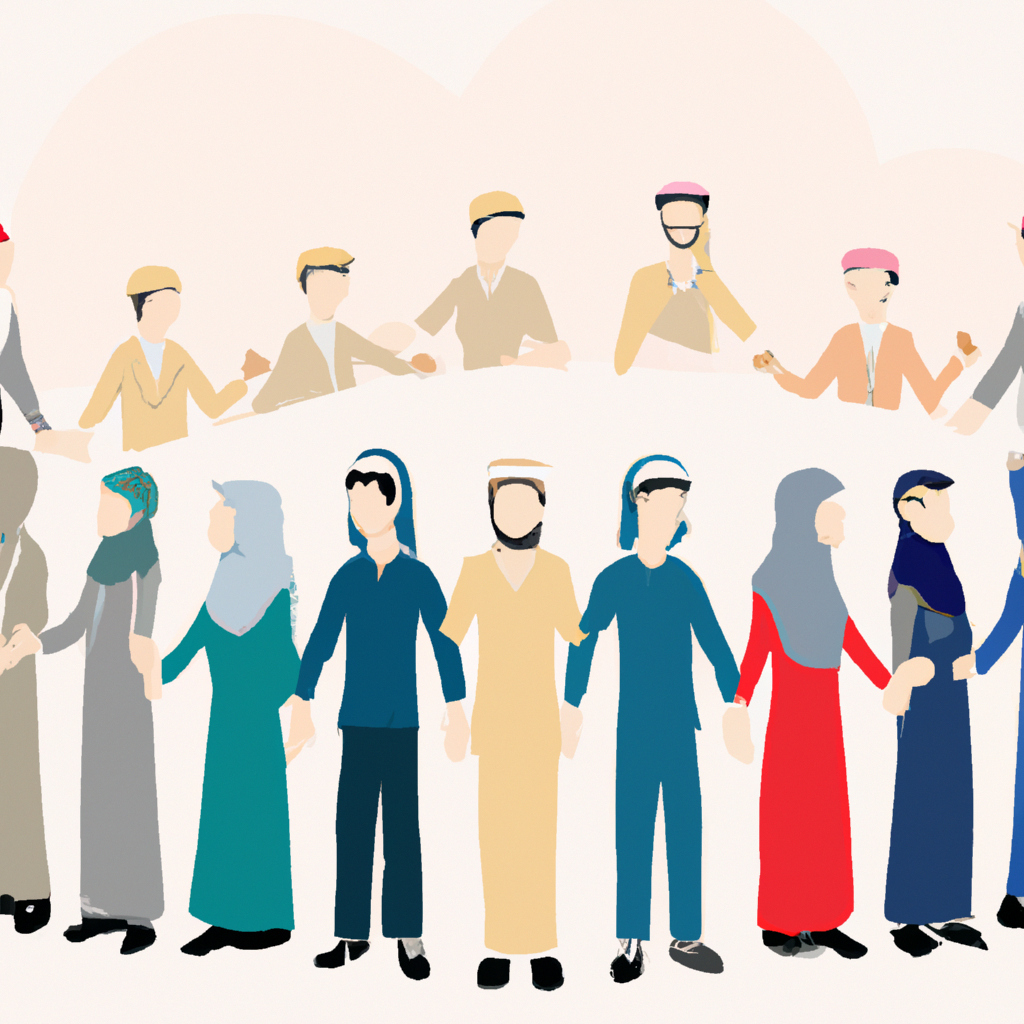
Now that it is Ramadan, it would be beneficial to better understand Muslim-majority ethnicities. Contrary to what some believe, they are by no means a uniform group.
To begin with, they have different languages, cultures, and identities: Arabs, Berbers, Turks, Persians, Pashtuns, Pakistanis, Bengalis, Indonesians, etc. Many of these ethnicities also include Christians and Jews. And, more importantly, within all of them there is a great variety of people:
- From the most just and righteous to the most vile and miserable.
- From the most selfish to the most generous.
- From the most despotic (in fact, most of these countries have authoritarian regimes) to those who fight for human rights.
- From the most hardworking to the least diligent.
- From the mediocre to the most talented and excellence-oriented (one only has to look, for example, at the wonders of Islamic architecture in Morocco, Abu Dhabi, northern India and many other places), etc.
That is to say, the same plurality exists as in other cultures, but with different percentages. For example, there is a higher proportion of Arabs with a fatalistic view, summarized in the expression “inshallah.” This means whatever Allah brings us instead of deciding our destiny by setting goals and striving to achieve them. Therefore, on average, they are less inclined than Westerners to fight for objectives, with some being more passive. But at the same time, some are very proactive, entrepreneurial and give their best. I have seen it with my own eyes.
Likewise, although some may not believe it, a part of Muslim-majority societies is secularized, free-thinking and modern, even with a Western mindset. On the one hand, there are atheists, agnostics and even those who reject Islam. And they are quite a few, or many more than it seems, as most of them are forced or heavily pressured not to express it openly to avoid oppression:
- Social, such as rejection, contempt, aggression, expulsion from families, disinheritance.
- Institutional, ranging from deprivation of child custody or inheritance to the death penalty.
The Qur’an considers apostasy—that is, leaving Islam—to be a grave sin deserving severe punishment. The Hadiths, which are ancient biographies of Muhammad and constitute the second pillar of Islam after the Qur’an, condemn apostasy with the death penalty. For all these reasons, quite a few people pretend to be Muslim—even performing the prayers and observing Ramadan—when in fact they are not. It is difficult to obtain exact figures, but in some countries non-believers may account for more than 20%.
For example, in a GAMAAN interview with 40,000 Iranians, no less than 47% claimed to have transitioned from religious to non-religious. 78% of the total believed in God, but only 37% identified as Muslim. 9% declared themselves atheist, 8% Zoroastrian, 7% spiritual, 6% agnostic, and 22% as none of the above options. For this reason, more and more mosques are becoming empty and have to close down.
Sociologist Ronald Inglehart has analyzed surveys from over 100 countries conducted between 1981 and 2020. His conclusion is that there is rapid secularization in all Middle Eastern countries. The increase in the so-called “nones,” who do not identify with any specific faith, has occurred in countries as diverse as Iraq, Tunisia and Morocco.
This de-Islamizing evolution occurs especially in places that have historically had secularizing political regimes, whether socialist or of another nature, such as that of Shah Mohammad Reza Pahlavi in pre-Islamic Republic Iran or Atatürk in Turkey. In fact, in this country, there is a great polarization between people with a more Western mindset, especially on the west coast, and conservative Muslims, who are the majority inland.
In many places, there are brave free-thinking YouTubers who speak of freedom and are critical of traditional Islam, despite the fact that they can be prosecuted for blasphemy or are threatened or even murdered by fundamentalists.
On the other hand, within the Muslim community, there are very different types, from the most fundamentalist to the most tolerant and modernist. According to some estimates, approximately a quarter are fundamentalists, of whom a minority are jihadists. At the other extreme, we have another minority of liberal believers, whether openly and self-consciously or de facto. And the majority are conservatives.
Therefore, most Muslims are misogynistic, homophobic and have an oppressive and repressive mentality against those who deviate from certain norms contained in the Quran and Hadith. However, although it may seem that there is a regression in countries like Afghanistan and Iran, in reality, a modernizing process is taking place in many, both socially and legally.
For example, there is an increase in those who believe that women should have the same rights as men. More sociological details about different Muslim-majority countries can be found in studies such as those by the Pew Research Center or others. And about emigrants from these origins to the West in this article.
Let’s get to know our neighbors better and not reject them as a whole. We can do so with those who come with bad intentions, such as committing terrorist acts or crimes. Or with those who want to impose medieval Sharia laws on us or take advantage of our Welfare State, living without working thanks to public aid. But let us be welcoming, respectful, and cordial with those of good faith. We can close our doors to those who come to subtract, but let us open ourselves to those who come to add.
Thank you for sharing this article if you believe it will help others gain a broader perspective.

