GIFT:
GIFT:
Like virtually all countries, France also has its iconic villains—that is, scoundrels who caused great suffering to innocent people and who, despite this, are glorified. Two textbook examples are Charlemagne and Louis XIV, while Napoleon Bonaparte would simply be an antihero.
CHARLEMAGNE
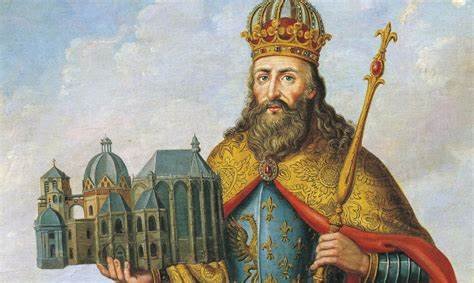
This country has erected a statue of that Frankish emperor no less than in front of Notre Dame Cathedral in Paris. Germany also honors him with monuments. However, the prize for the finest tribute goes to Andorra, which has created a national narrative based on the claim that Charlemagne is the founder of that microstate. For this reason, it dedicates its national anthem to this criminal against humanity, in which he is called “father”. And, as if that were not enough, it has chosen his name for its university and its main street.
To begin with, the Andorran story is fabricated, as is often the case with national narratives. However, what matters here is that a great villain is exalted—so much so that historians highlight his cruelty compared to other medieval monarchs, which is saying something in such a bloody era.
LIVE WITHOUT HARMING! Undo identity-based indoctrination that alienates you from others
He spent almost his entire life waging war to conquer new territories, where looting, rape, and murder were commonplace, but with the Saxons (inhabitants of what we now call northern Germany, from Frankfurt to Denmark) he reached the highest level of brutality, since they were an ethno-religious group distinct from Christian Europeans.
LOUIS XIV
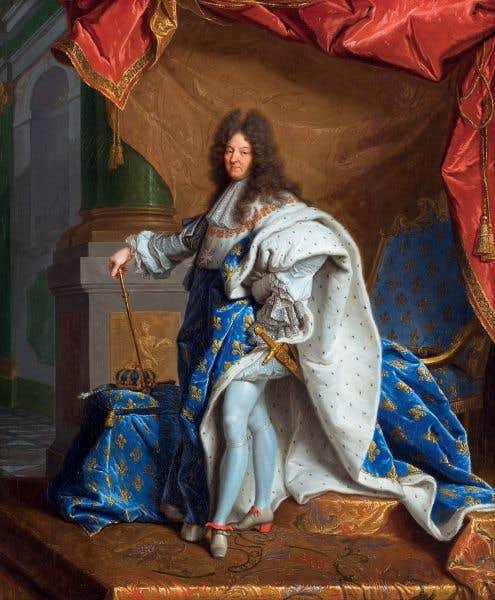
France also has statues of the Sun King, despite the fact that he was an absolute monarch who lived amid the greatest opulence in Europe, accompanied by his large court of aristocrats in his Palace of Versailles. All of this came at the cost of exploiting the people, most of whom lived in extreme poverty, as well as the enslaved people in the colonies.
Moreover, he was a king who took part in wars to satisfy his ego, which caused great suffering and ruined France, plunging it into famine. He maintained the Inquisition and torture and carried out oppression against protestants, which caused hundreds of thousands of them to flee the country.
To be fair, it must be said that there are still some street names, squares, and public schools dedicated to this figure, but they are very few, as this country has a policy of giving visibility to republican leaders and scarcely to monarchs. It is therefore, in part, an example to follow, although it is advisable to complete that process.
NAPOLEON BONAPARTE
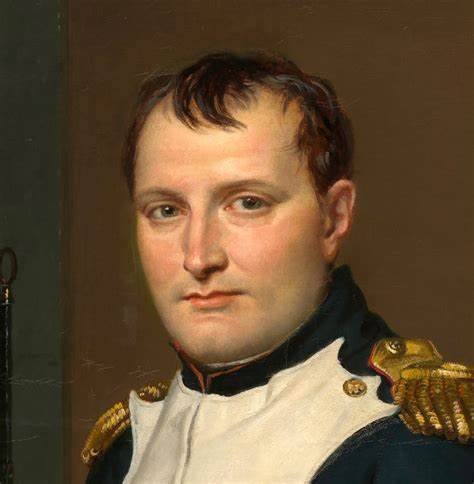
This talented military leader and emperor is far more glorified than other French monarchs, especially in his splendid tomb in the imposing Les Invalides building in Paris, which receives more than 1 million visits each year.
In fact, the villainy of this emperor is more controversial, as he did some very good things, such as spreading the ideals of the Enlightenment across Europe, granting many Europeans freedoms and rights for the first time.
However, to satisfy his megalomaniacal ego and his personal ambition to have a great empire, he cared little about bringing death, suffering, and misery to many millions of Europeans through his wars that left Europe devastated. He also plundered and reintroduced slavery, which the French Revolution had abolished.
Read LIVE WITHOUT HARMING: Oppose imperialism, militarism and the cult of violence
For all these reasons, he cannot be considered the typical textbook icono-villain like the others, but he does not deserve recognition either.
By contrast, it is entirely appropriate that France pays tribute in its Panthéon to people who have contributed to a more just world, such as Rousseau, Voltaire, and Montesquieu.
Read HONOR NO VILLAIN! But rather those who fought for a better world
Thank you for sharing to help cleanse historical memory,