




 GIFT:
GIFT:
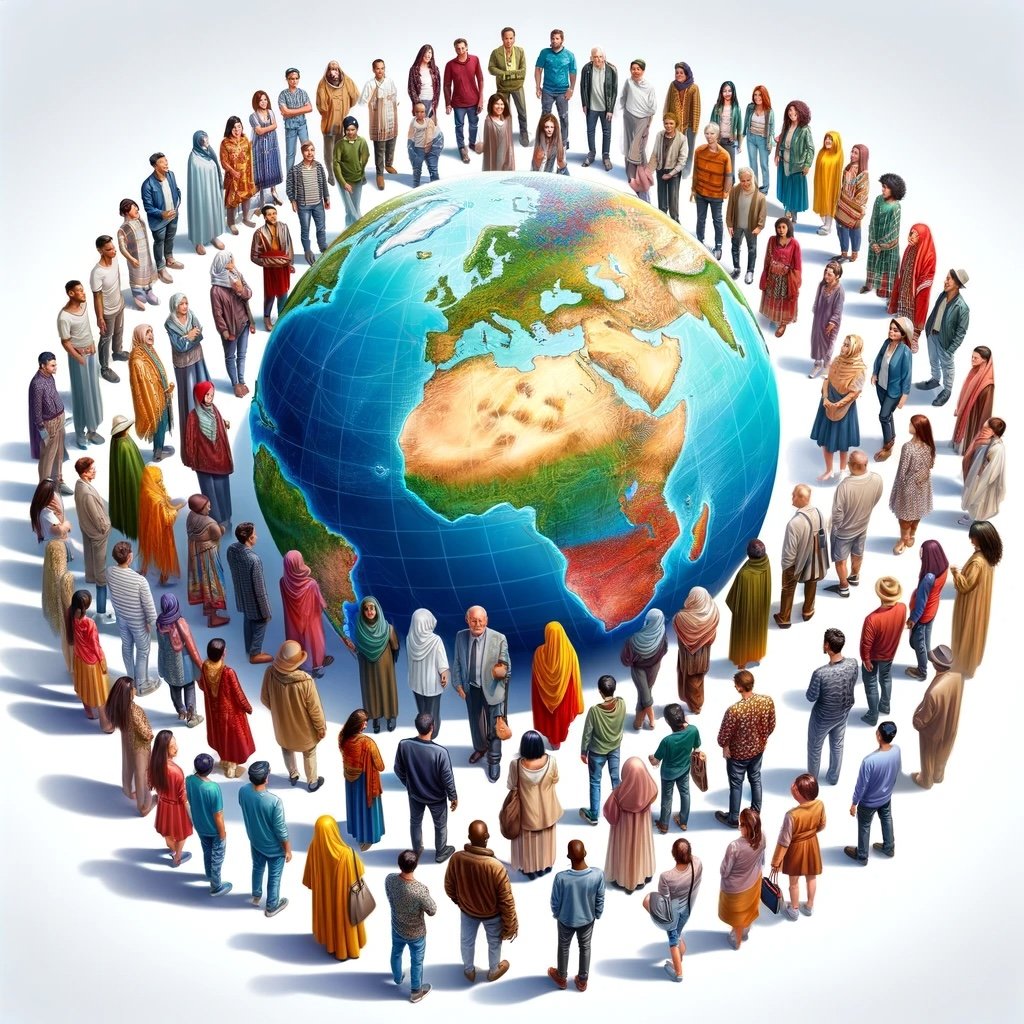
Enriching cosmopolitanism is open, respectful, tolerant, stimulating, interesting, modern, and cool, whereas multicultural degradation is the opposite: harmful, impoverishing, regressive, third-worldizing, backward-looking, sometimes even medievalizing and squalid.
In the former, 2+2 is more than 4. In contrast, in the latter, the result is not only less than 4 but can even be negative. Instead of an addition, it turns out to be a subtraction.
Cosmopolitan environments are composed of broad-minded individuals, receptive to all good things from outside, without imposing barriers based on nationality, race, origin, etc., but only on the basis of harmfulness. These environments are often formed by people of very diverse backgrounds, but this is not necessarily the case. The key is the attitude towards life, which is usually live-and-let-live and inclusive of anything that is not harmful. These circles, where there is curiosity and motivation to build, tend to be fertile ground for the dissemination of new ideas and advancements, for entrepreneurship, initiatives and innovation, progress, and an orientation towards excellence and continuous improvement.
BUILDING A BETTER WORLD! Strive for excellence
This was the case in Pericles’ Athens in the 5th century BC, the Florence of the Medici during the Renaissance, Paris in the 18th and 19th centuries, New York and Berlin in the Roaring Twenties, or San Francisco, London, Amsterdam, and Ibiza in the 1960s and beyond. Just like the formation of a rainbow when certain atmospheric elements converge, when certain circumstances come together in specific places and times, these inspiring and even magical environments are created with a rich humus of freedom and free thought. These attract creative and restless people, leading to a cultural, artistic, scientific, technological, economic, and/or social flourishing.
In contrast, toxic multiculturalism is made up of closed communities governed by strict archaic rules, punitive towards those who deviate from these norms, some of which are absurd, sometimes enormously harmful and cruel to innocents. They are suspicious of outsiders, endogamous, and self-absorbed. They always focus on the same navel and repeat the same rituals and behaviors, over and over, year after year, century after century, impervious to the passage of time. Their members usually marry within their group, and even their friends belong to the same community.
BUILDING A BETTER WORLD! Preserve the good and change the harmful
Cosmopolitanism is composed of individuals, and multiculturalism of tribes. The former is based on civilized people evolving towards an ever-improving future, and the latter on highly gregarious ethnic groups anchored in the past and mediocrity.
BUILDING A BETTER WORLD! Avoid harmful gregariousness
Immigration of the second type leads to the compartmentalization of society into ghettos, into different parallel societies, sometimes in conflict. It is possible that sooner or later tensions, violent conflicts, or even wars may arise between them, as in Lebanon or the Balkans.
The degradation it generates in certain neighborhoods forces lifelong residents to flee them. But those who cannot afford to leave remain trapped in these neighborhoods against their will, becoming victims of an increasingly deteriorated, insecure, oppressive, and decaying environment.
BUILDING A BETTER WORLD! Yes to progress and quality of life, no to harmful decadence
Let’s not allow this to happen. Let’s not open the doors of reasonably evolved societies to barbarian invaders, as the Roman Empire did with those who would eventually destroy and dominate it. And in schools and families, let’s foster openness to what is nourishing and healthy internationalism (in balance with a healthy attachment to the positive aspects of the cultural heritage inherited from one’s own family and society) versus backward and harmful tribalism.
BUILDING A BETTER WORLD! Be open, but not to what is harmful
Thank you for sharing and raising awareness if you want a society that always improves, never worsens.

