




 GIFT:
GIFT:
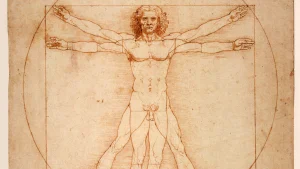
Why do we still believe we are the center of the universe?
We have a tendency to be self-centered as a species, but this was not always the case. For most of our history, we considered ourselves simply as one more being within nature, just like other animals. That is to say, we saw ourselves as part of a larger whole and not as its center. It was from the Neolithic period onward, with the emergence of animal domestication and their exploitation through livestock and horsemanship, that we changed our worldview to an abusive anthropocentrism. We placed ourselves at the top of the natural hierarchy, adopting an attitude of dominance.
Later, during the Renaissance, Humanism intellectually reinforced this conception. “Man is the measure of all things,” thinkers of the time proclaimed, further distancing us from our connection with nature. It is worth acknowledging that this represented an advance over the medieval theocratic view, according to which God was the center of the Universe and humans were insignificant in comparison.
However, from a scientific perspective, we know that the universe has no defined center. According to the Big Bang theory, at best, we could speak of an origin point from which everything expands, but that point is not, nor has it ever been, on Earth.
Ethnocentrism and Egocentrism: Parallels with Anthropocentrism
Anthropocentrism, so characteristic of human beings, shares similarities with other self-centered perspectives, such as ethnocentrism and egocentrism.
Ethnocentrism:
This view positions an ethnic, cultural, or racial group as the center of the world. Common examples include Eurocentrism, which places Europe and the West as a universal reference, or Sinocentrism, reflected even in the term “Zhongguo” (China), meaning “Middle Kingdom.”Egocentrism:
For example, we focus our lives on maximizing pleasures and experiences for ourselves and our loved ones: exquisite meals, getaways, trips… We often boast about these experiences on social media, while we enslave BILLIONS of sentient beings for life in overcrowded cages, depriving them of almost all the pleasures and good experiences they would have if they lived in freedom. To explain it more simply: ME, ME, ME (which includes my loved ones, who are an extension of myself) and others matter little to me.
Read LIVE WITHOUT HARMING: Let’s fight the perverse narcissism we all possess
HOW TO LIVE WITHOUT HARMING? Enjoy self-interest and avoid selfishness
This notion leads to speciesism and the reification of everything non-human, as well as its exploitation and mistreatment, its use and abuse.
FOR A WORLD WITHOUT HARM: Do not be unscrupulous speciesists
THE ART OF LIVING WITHOUT HARMING: Do not objectify
Because many believe that non-human animals are made for our use and enjoyment. But this belief has no scientific basis; rather, it is a norm that Homo sapiens came up with because it suits them. From a biological point of view, living beings are not born to serve anyone; they simply exist, with a genetic code normally oriented towards survival, specifically their own, that of their offspring, their herd and generally their genes.
The Funnel Law
Anthropocentrism is closely linked to the Funnel Law, wide for us and narrow for others. For example, many humans love that there are predators for other species, claiming that this maintains the balance of nature, but not for human beings, despite the fact that their overpopulation is causing havoc to it.
THE REVOLUTION OF LIVING WITHOUT HARMING: Be impartial and do not apply double standards
Another double standard is to claim that one should not be so sentimental about animals and, therefore, to look favorably upon causing them great suffering. However, these same people often expect others to be extremely careful with their feelings, even avoiding expressing truths that might minimally discomfort them.
Anthropocentrism is arbitrary and opportunistic, and therefore also applies different standards to various species depending on what each contributes to us. Thus, parents, teachers, media and other influences send children the message that dogs and cats are “friends,” cows and chickens are “food,” and rats and mice are “pests.” Most children are also taught that human desires, needs and interests always outweigh those of any other species.
Read “HOW TO LIVE WITHOUT HARMING?” Do not be opportunistic
Education based on anthropocentrism is extremely damaging, as it reinforces a natural predisposition towards abuse. If we add cultural influences that normalize these attitudes to this innate component, we create the perfect cocktail for evil.
Unsound Beliefs
Another example of anthropocentrism is being in favor of animal exploitation and mistreatment with the typical argument that meat is good for health. On the one hand, this is not true, as it is carcinogenic, hormonally treated, and contains antibiotics. And fish contains minerals and toxic substances dumped into the sea, such as arsenic. In both cases, animal products contain cortisol and other substances secreted by their bodies due to stress and suffering. And this worsens the quality of these foods, according to multiple studies, such as those from the University of Bristol or Colorado.
But, most importantly: even if it were healthy, it is not just what is good for us and our loved ones that counts, but also what is good for others. Because we are not the center of the universe, much less its entirety. We share this planet with billions of other sentient beings. It is essential to learn to consider everyone around us, not just those who are part of our inner circle.
Each person causes suffering to over 20,000 non-human animals throughout their life. These sentient beings also seek their well-being and have the same right to live free from suffering as any other living being. It is not just about our quality of life, but also about the quality of life of those who suffer the consequences of our actions, such as keeping them in cages for their entire lives, subjected to miserable existences.
What if we stopped looking at ourselves so much in the mirror?
Therefore, wouldn’t it be better if we stopped constantly looking at ourselves in our little mirror and turned our gaze to encompass everything around us?

The most anthropocentric individuals often reject animal rights, while firmly defending the criminalization with prison sentences for abortion, even in cases of fetuses that do not yet feel, thus still being similar to plants. This stance reflects a lack of consideration for the suffering of sentient beings who do not carry the label of “human,” allowing their mistreatment and death, even in activities such as bullfighting or circuses with animals domesticated through beatings, for the sole purpose of entertainment. All of this is based solely on the taxonomic label they bear.
FOR A WORLD WITHOUT HARM: Avoid labels that are a free pass for harm
Money and Tradition
In the past, certain sectors of society fiercely opposed the abolition of human slavery, especially those who depended economically on it, such as plantation owners, and the most traditionalist sectors. Today, we observe similar resistance to the abolition of non-human slavery, perpetuated by the meat industry and other defenders of the status quo. The main pillars of this anthropocentric exploitation are often the same: those who benefit economically or who are deeply tied to the established order, resisting change despite its evident injustice.
Let’s be conservative with what is good and progressive with what is HARMFUL
But, in the end, good will probably triumph over evil. However, for that to happen, we need your help, because:
“The only thing necessary for the triumph of evil is for good men to do nothing”.
Edmund Burke
Let’s learn from the most advanced countries
Thanks to compassionate and committed people, we are moving in the right direction, towards the mountaintop, especially in the most advanced places, such as Switzerland, the United Kingdom, Sweden, Denmark, the Netherlands, Austria or California.
And this is happening not only in the First World, but also in developing countries like India, where, in addition to animal protection laws, they have a strong vegan culture and respect for animals. All of the above is linked to the Hindu, Buddhist, and Jain concept of “ahimsa” (non-violence) and not harming other sentient beings.
In Africa, we have, for example, Tanzania, which also has legislation against animal cruelty and where relatively few animals are slaughtered and consumed. Furthermore, they have a lot of extensive livestock farming compared to intensive farming.
And in Latin America, Mexico is worth highlighting, where the Chamber of Deputies approved a ruling to modify Article 73 of the Constitution in order to include animal welfare protection. And where different states have been approving quite advanced protective regulations.
What can an empathetic and ethical person do to combat anthropocentrism and advance animal rights?
- Learn.
- Share.
- Educate children and teenagers.
- Choose plant-based options.
- Vote for political parties committed to animal well-being.
- Sign campaigns.
- Convince.
- Donate money.
- Become a volunteer.
Read more in… AVOID HARM! 10 actions to prevent animal cruelty
LET’S BE COMPASSIONATE!
Every action counts. Let’s build a more just and respectful world for all sentient beings together.
THE ART OF LIVING WITHOUT CAUSING HARM: Let’s be good people
Thank you for sharing this message and being part of the change,

