




 GIFT:
GIFT:

Saint Paul affirmed (Romans 13:1-4) that one must always submit to all authority, because it always emanates from God, and therefore to go against any dictator or despot, no matter how repressive or cruel (like Hitler or Stalin), is to go against God.
Furthermore, he said this in the context of the Roman Empire in which he lived, which was very oppressive and repressive, based on domination, conquest, and the subjugation of the conquered. In fact, many of these had their lands stolen and were turned into slaves, with an estimated 35% of the total population being enslaved. Any disobedience or rebellion against this tyranny was suppressed with very cruel punishments, such as crucifixions, where carrion birds would tear flesh from the victims.
Perhaps Saint Paul was as steeped in the mentality of his time as bread soaked in oil. Consequently, he believed that such an unjust established order was correct. And/or perhaps he found it practical, demanding obedience to authorities from his followers so that these authorities would be more tolerant of Christians.
Read LIVE WITHOUT HARMING: Let’s not be authoritarian
Whatever the reason Saint Paul said what he said, the consequence is that it has served as a basis for legitimizing, for many centuries, the arbitrary power of monarchs and the privileges and abuses of nobility and clergy, as well as, later, autocratic and oppressive regimes. All of this by the grace of God, who supposedly grants them a kind of power of attorney by which he authorizes them to do and undo whatever they wish, no matter how abusive and cruel.
Read HOW TO LIVE WITHOUT HARMING? Let’s examine the harmful side of religions
For all the above, it is appropriate to view these verses in the historical context in which tyranny was seen as normal and not as the will of a righteous and integral God.
Read FOR A WORLD WITHOUT HARM: Let’s understand each religious precept within its historical context
Read THE ART OF LIVING WITHOUT HARMING: Let’s contextualize the harmful verses of the Bible
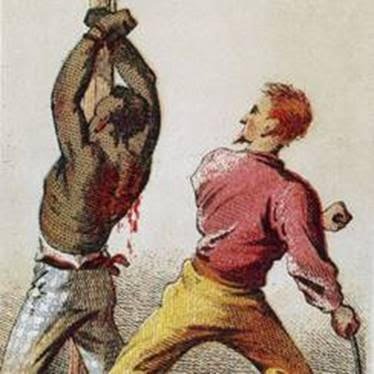
Regarding slavery, it has been legitimized based on the following verses, among others:
Old Testament:
Leviticus 25:44–46, which permits owning slaves as long as they come from other nations or religions. It considers them mere property, so the owner may always make use of them and pass them on as an inheritance. By contrast, among Jews one must not rule harshly (from which it follows that slaves from other ethnic groups may be treated with such harshness).
Exodus 21:20–21, which even authorises beating your slave, and if he survives for a day before dying, you have done nothing punishable.
New Testament:
Peter 2:18, in which Saint Peter orders slaves to be submissive to their masters, even the most despotic and abusive.
Ephesians 6:5, in which Saint Paul requires slaves to be obedient and dutiful, with fear (a term that implies they must accept the constant fear that at any moment their masters may whip or mistreat them in any other way typical of that period, without any sign of rebellion, always with their heads down and shrinking in on themselves).
Titus 2:9–10: in which Saint Paul once again wants slaves to be submissive and compliant with their slave-owning masters, without talking back at any time.
It is because of these texts that for almost the entire history of the Church, Canon Law has approved slavery, provided that slaves were made from peoples of other religions. In fact, the current Catechism still does not disapprove of slavery, probably because it does not want to contradict the Bible, which is placed on a high pedestal. And it is also due to these verses that of the hundreds of Popes there have been, almost all have been in favor of slavery, except for the most recent ones, influenced by liberalism.
The Bible’s ideas about slavery are not exclusive to fundamentalist Christianity, but rather common to most cultures that emerged across almost the entire world from a certain point in the Neolithic era until the penetration of liberal ideas in the 19th century, which led to the abolition of slavery.
Therefore, the preceding passages should be understood not as the word of a good and loving God, but in the context of societies that existed from the Neolithic to the Enlightenment, based on domination, appropriation, and the reification of human and non-human beings: conquered people reduced to slavery or different types of servitude, wives and children as mere property of the pater familias, and animals as mere commodities.
Consequently, it would be advisable to reform the Catechism to disapprove of these harmful verses and condemn slavery. In fact, all denominations should make the necessary changes on these issues.
Read THE REVOLUTION OF LIVING WITHOUT HARM: Let us reform the harmful part of Christianity
Read LIVE WITHOUT HARMING!: Respect the freedom of others
Read LIVING WITHOUT HARM: Let us rebel against slavery, including hidden slavery
Thank you for sharing so that they may be carried out,

