



 GIFT:
GIFT:

Ever since the Neolithic period, it has been normalized to cause harm to women, including through physical and sexual violence. In fact, this has been widespread across most regions of the world and throughout history since the Neolithic, based on the dogma that a woman is simply another possession of her husband, much like an ox, a goat, a plow or his children. At times, this has even been accompanied by the belief that he can do with her as he pleases. It is a mental construct tailored to the selfish interests of men, who held (and in some places still hold) the power granted to them by their strength and aggressiveness.
For example, in the Roman Empire, women were their husbands’ property. In traditionalist Islam, they are to be beaten if they do not obey immediatly. In Christianity according to the Bible, they must remain submissive to men.
The same has occurred in Asian cultures. Thus, in traditionalist Hinduism, a woman is considered someone (or something) at the service of her husband, existing solely to please him. Consequently, when he dies, she loses her reason for being, and they used to be burned alive on the funeral pyre alongside their husband’s corpse. Currently, this is prohibited and very few cases occur, but conservatives reduce widows to mere outcasts and evict them from their homes without any inheritance rights, leaving them to live on the streets on alms.
Even Gandhi asserted that if a woman was raped, she lost her honor, and therefore he approved of her family murdering her to save her and her community’s honor.
In China, many girls’ feet were bound, causing great pain, broken bones, infections, gangrene and a drastic reduction in mobility, all because it would please their future husbands. Newborn daughters were also killed because they were undervalued for not having the “proper label,” unlike sons.

In Japan, geishas were educated to please men. The level of objectification of women was such that during World War II, between 200,000 and 400,000 Chinese, Korean, European, etc., sex slaves were kidnapped to satisfy the sexual needs of their 6 million soldiers. They were usually between 14 and 19 years old, although some were girls who had not yet reached puberty. They were raped 5-30 to 10-40 times a day, which amounted to several million rapes daily.
They lived imprisoned in miserable conditions. The Japanese denigrated them, colloquially calling them “public toilets” or “female ammunition” and officially “war supply units,” meaning simple objects to be abused. Doctors also took advantage of their medical examinations, which consisted of checking for venereal diseases, to rape them.
They were systematically beaten and abused; sometimes tortured and killed, as soldiers had the right to do all of that if they wished. They were raped so many times that it eventually became painful for their vaginas and other organs. They were raped even when infected and ill, despite their pleas and tears. And if they refused, they were assaulted.
At least 75% of them died, some by suicide. When the Japanese were losing the war and had to retreat, they killed many or forced them to commit suicide, making them “disposable”. Among the few who survived, many suffered trauma and a significant number committed suicide. Most of those who survived such horror were left infertile.
It was not until half a century later that the Japanese government apologized, and nationalists continue to oppose this apology.
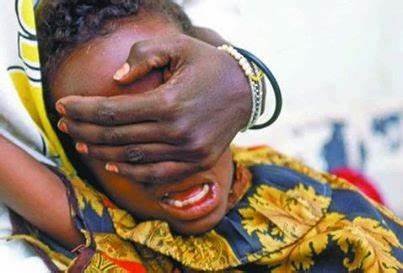
And the same has happened in Africa, where the ablation (excision) of women’s clitorises or sewing their vaginas is still widespread, in order to keep them virgin and chaste and thus constitute an exclusive sexual object for their future husbands. In fact, this outrage, performed against their will, still affects more than 200 million women and girls in 30 countries, despite being painful as it is done without anesthesia. Moreover, it is a dangerous operation that leads to health problems. When their vaginas are sewn, they frequently leak urine, causing them to smell and eventually be repudiated by their husbands and thrown out onto the street.
On all continents, raping women during wars has been normalized as part of the spoils of war, and it continues to happen. Within the female collective, those who deviated from the strict role assigned to them, such as those who exercised their sexual freedom, those who excelled intellectually, free spirits, healers, etc., have been particularly attacked, sometimes accused of witchcraft and burned at the stake.
It was the liberalism that emerged from the Age of Enlightenment that gradually redressed all these atrocities. Despite this, there is still much aggression against women worldwide. According to the UN, “there is no region of the world, no country, and no culture in which women’s freedom from violence has been guaranteed.”
It is estimated that at least 30% of women over 15 years old worldwide have been physically or sexually abused (not counting sexual harassment) by a man at some point in their lives. Gender-based violence causes as much death and poor health in women aged 15 to 44 as cancer and is a greater cause of poor health than malaria and traffic accidents combined.
This occurs especially in the third and fourth worlds, where in many countries, the majority of women continue to be victims of aggression. For example, in Bangladesh, 73.78% of them are victims of domestic violence by their husbands.
In each part of the world, certain forms of violence are more prominent. For example, dowry-related violence is more typical of India, Bangladesh, and Nepal. Acid attacks are also common in these countries, as well as in Southeast Asia, including Cambodia. Honor killings are associated with the Middle East and South Asia.
In contrast, marriage by abduction occurs in Ethiopia, Central Asia, and the Caucasus. And abuses related to bride price payments (such as violence, trafficking and forced marriage) are linked to parts of sub-Saharan Africa and Oceania.
Even in the Western world, there are still men who abuse their partners due to the belief, passed down from father to son, that women belong to them and are subordinate to them.
Rape, sexual assault, and domestic violence are often not reported due to social norms, taboos and stigma, as in certain cultures, the victim who reports would be considered “bad.” In some Muslim countries, women who have been raped are even imprisoned. And in others, if a victim files a complaint with the police, the police claim she provoked it. All of this means that there is insufficient data on the actual level of abuses.
What can we do to end this scourge?
1. EDUCATE CHILDREN and teenagers in the ethics of non-harm, in kindness, respect, freedom, equal rights, and justice.
2. PROMOTE THIS CULTURE OF RESPECT. Instead of remaining indifferent to news about harm to women, let’s do something: share and educate. Because when there is a sufficient critical mass of aware people, there is the necessary social pressure for aggressors to restrain themselves and for politicians to create adequate mechanisms to prevent abuse against women.
3. Open our eyes and minds TO THE WHOLE WORLD and not just to our country, as a woman harmed on the other side of the world experiences as much suffering as one who has been harmed in our neighborhood. Moreover, the number of victims worldwide is much greater than that in our country alone.
4. HELP with donations, time, sharing, or in other ways, NGOs that defend women’s rights, such as UN Women, human rights in general, such as HRW or Amnesty International, and/or the Well-Being Institute to spread the culture of kindness worldwide, of not harming anyone with the exception of legitimate self-defense.
Let’s do it for our daughters, granddaughters, and other female loved ones. And for the unknown women around the world.
Thank you for sharing to achieve a more aware and civilized society to live in regarding this issue.

